3.3 MILLION YEARS AGO
The hammerstone
Early toolmakers in Kenya struck stone with stone, sometimes resting it on an anvil, to knock off sharp flakes.
See the finds doodlehammer
A SHORT HISTORY OF THE HAMMER
The hammer may be the oldest tool there is.
Long before metal, someone picked up one stone to strike another. Millions of years later the idea is the same: a handle, a heavy head and a well-aimed blow. Here is how the hammer got from riverbank to toolbox, with the sources linked.
Plain English, with the sources linked.
3.3 MYA and counting
Pick a hammer for the jobTHE SHORT STORY
Three chapters in the life of
a very old idea.
3.3 MILLION YEARS AGO
Early toolmakers in Kenya struck stone with stone, sometimes resting it on an anvil, to knock off sharp flakes.
See the findsROMAN BRITAIN
A smith’s hammer head from Camerton, with its almost circular eye, is typical of Roman-period hand hammers.
Hammer factsIN YOUR DRAWER
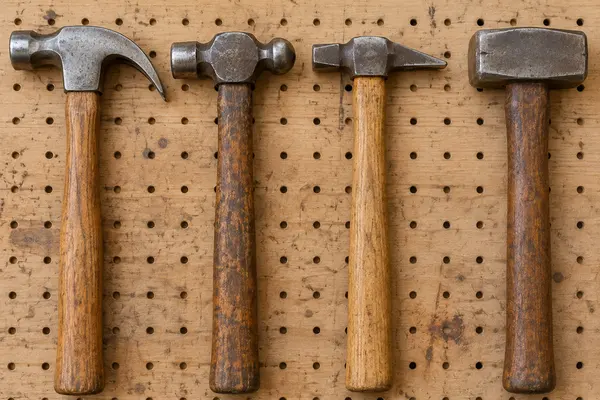
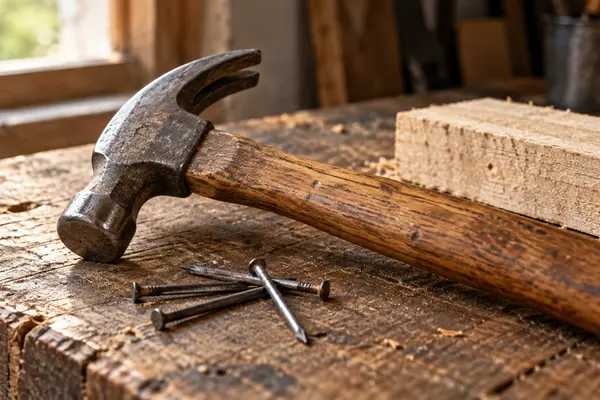
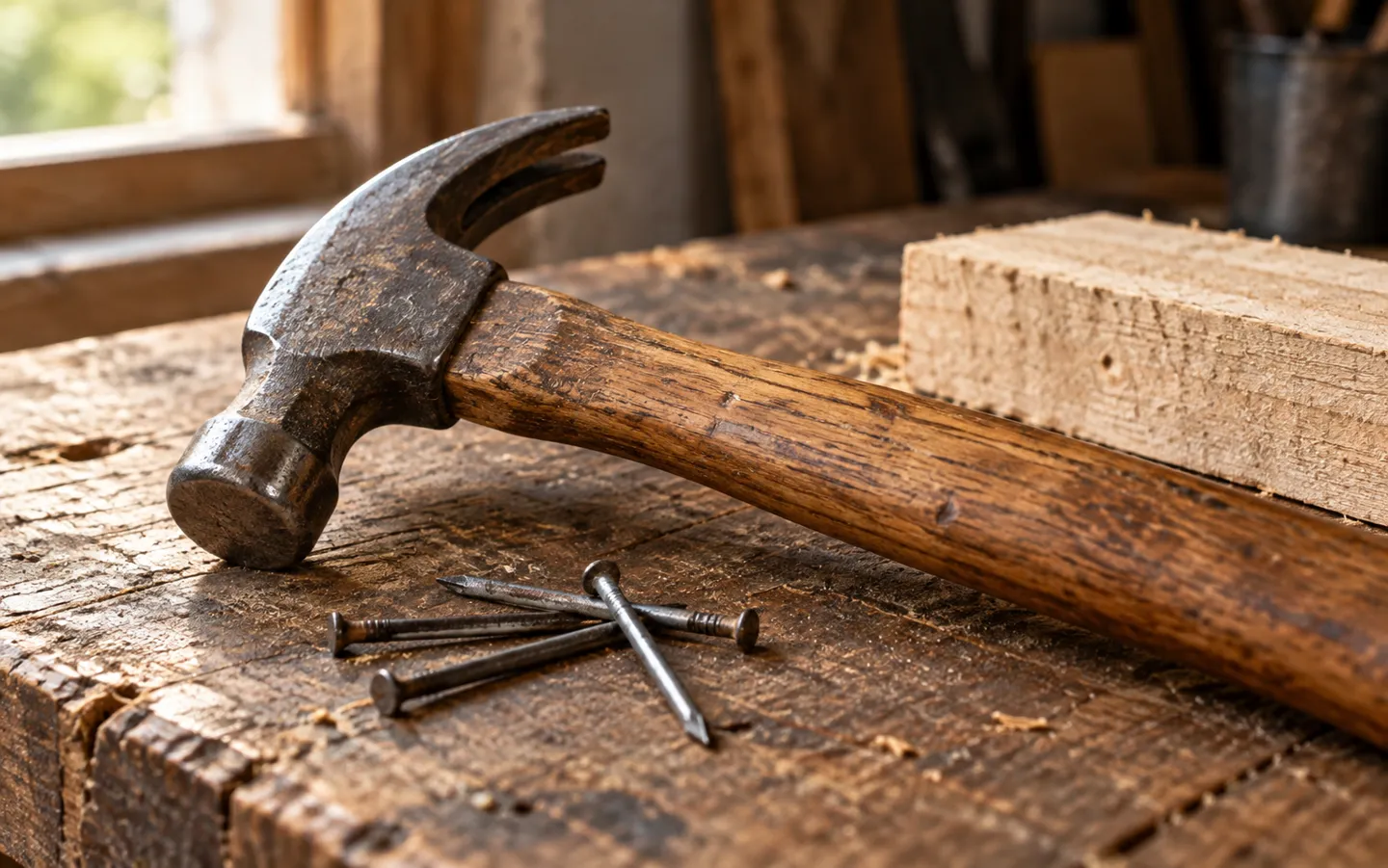
A handle, a striking head and a claw for pulling nails: the carpenter’s version most homes keep.
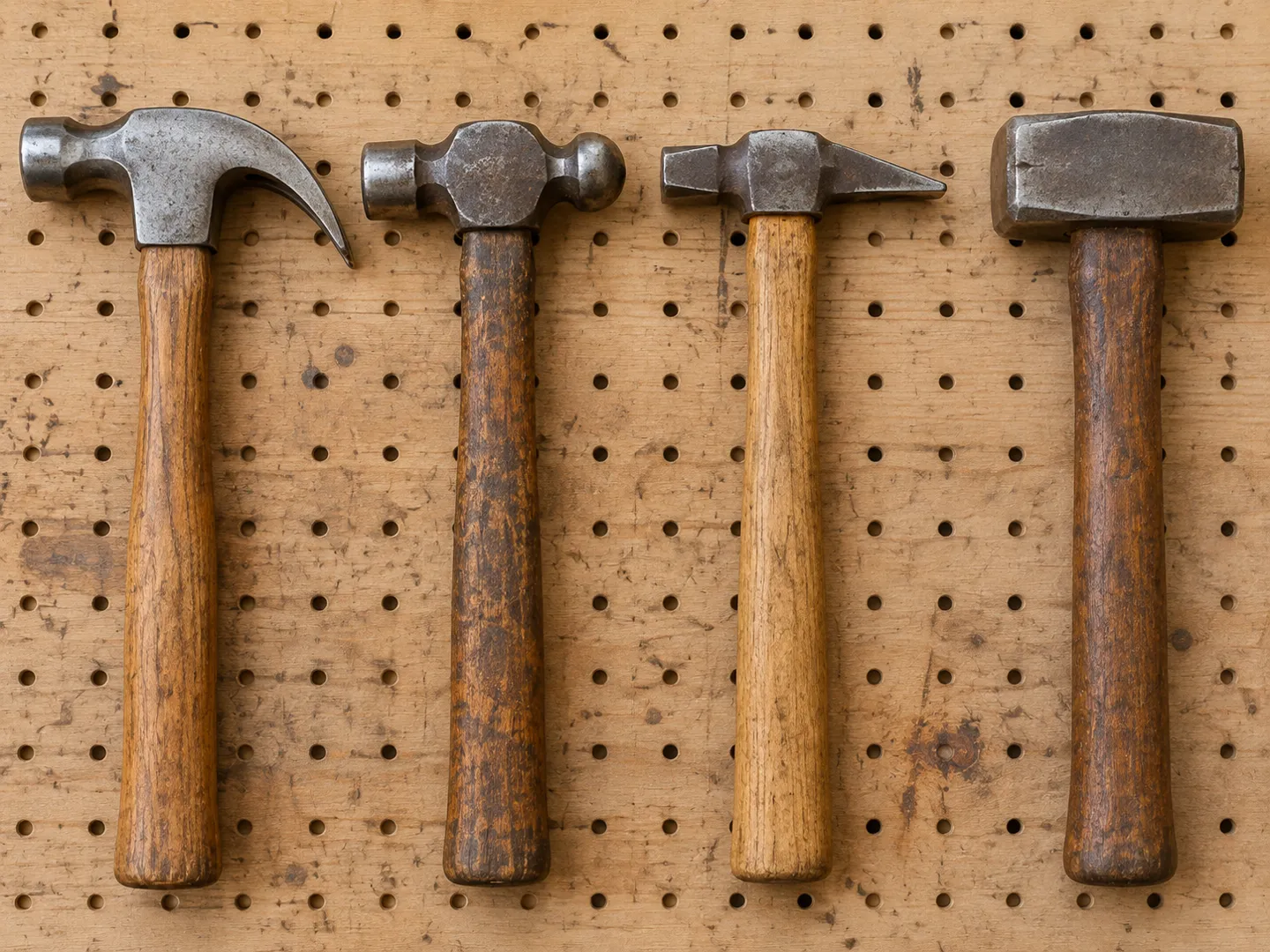
Which hammer?
QUICK CHECKS
OSHA guidance says a hammer with a loose, splintered or cracked wooden handle should not be used.
Chisels, wedges and drift pins should be kept free of mushroomed heads, according to the same guidance.
Oklahoma State University safety guidance advises safety glasses every time you use hand tools, to guard against flying objects.
The same guidance says not to use a wrench as a hammer, and never to strike a screwdriver with one.
TWO FINDS WORTH KNOWING
Two digs show that striking one stone
with another is not only a human habit.
3.3 million years
Oldest stone tools on record
Tools from Lomekwi 3 in northern Kenya were made with a hammerstone, sometimes on an anvil. They are roughly 700,000 years older than the Oldowan tools previously thought to be the oldest.
LOMEKWI 3, KENYA · NATURE, 2015
4,300 years
Chimpanzee nut-cracking hammers
A University of Calgary team excavated stones about the size of cantaloupes, with wear that showed chimpanzees had used them to crack nuts about 4,300 years ago.
TAÏ FOREST, CÔTE D’IVOIRE · PNAS, 2007
The hammer is less an invention than a discovery: a heavy object, swung well, does work that hands alone cannot.
A QUICK MATCH
Pick a job and see which kind of hammer has been made for it, from the very first hammerstones to the tools in a modern workshop.
This is a guide to the history and types of hammer, not safety training or advice for any particular task.
HAMMER FACTS
The Lomekwi 3 tools, dated to 3.3 million years ago, were announced in Nature in May 2015 and pre-date the Oldowan tools by about 700,000 years.
At Nyayanga in Kenya, Oldowan stone tools 2.6 to 3 million years old were used to cut and pound meat and plants, including butchering hippos. The kit had three parts: hammerstones, cores and the flakes struck from them.
Chimpanzees in the Taï rainforest of Côte d’Ivoire used stone hammers to crack nuts about 4,300 years ago, a team reported in PNAS.
An iron hammer head found at Camerton and held by the British Museum is 88 mm long and weighs 507.2 g, typical of Roman-period smiths’ hand hammers.
Hand hammers are a handle and a striking head. Britannica gives weights from a few ounces or grams up to 15 pounds (7 kg) for stone-breaking hammers.
OSHA guidance says spark-resistant tools made of non-ferrous materials should be used where flammable substances could be ignited by a spark.
QUICK QUESTIONS
Short answers to the questions people ask most.
At least 3.3 million years ago, as far as the evidence goes. Stone tools found at Lomekwi 3 in northern Kenya are dated to 3.3 million years ago, and their makers struck stone with a hammerstone, sometimes resting it on an anvil. That is roughly 700,000 years older than the Oldowan tools once thought to be the oldest.
Yes. Researchers led by the University of Calgary dug up stone hammers in the Taï rainforest of Côte d’Ivoire that chimpanzees used to crack nuts about 4,300 years ago.
It depends on the job. Britannica gives a range from a few ounces or grams up to 15 pounds (7 kg) for hammers used to break stones. A Roman-period smith’s hammer head in the British Museum weighs 507.2 g.
Pulling nails out. Carpenters’ hammers often have a claw on the head for extracting nails, so the same tool can drive a nail and remove it.
Workplace safety guidance from OSHA says a hammer with a loose, splintered or cracked wooden handle should not be used, and university safety guidance recommends safety glasses when using hand tools. This page is a general guide, not safety training.
Updated
A NAME THAT HITS HOME
doodlehammer.com is part of the DoodleSale portfolio. It isn't in an auction right now, but you can ask about leasing it.